Saturday, 27 April 2013

Wire drawings

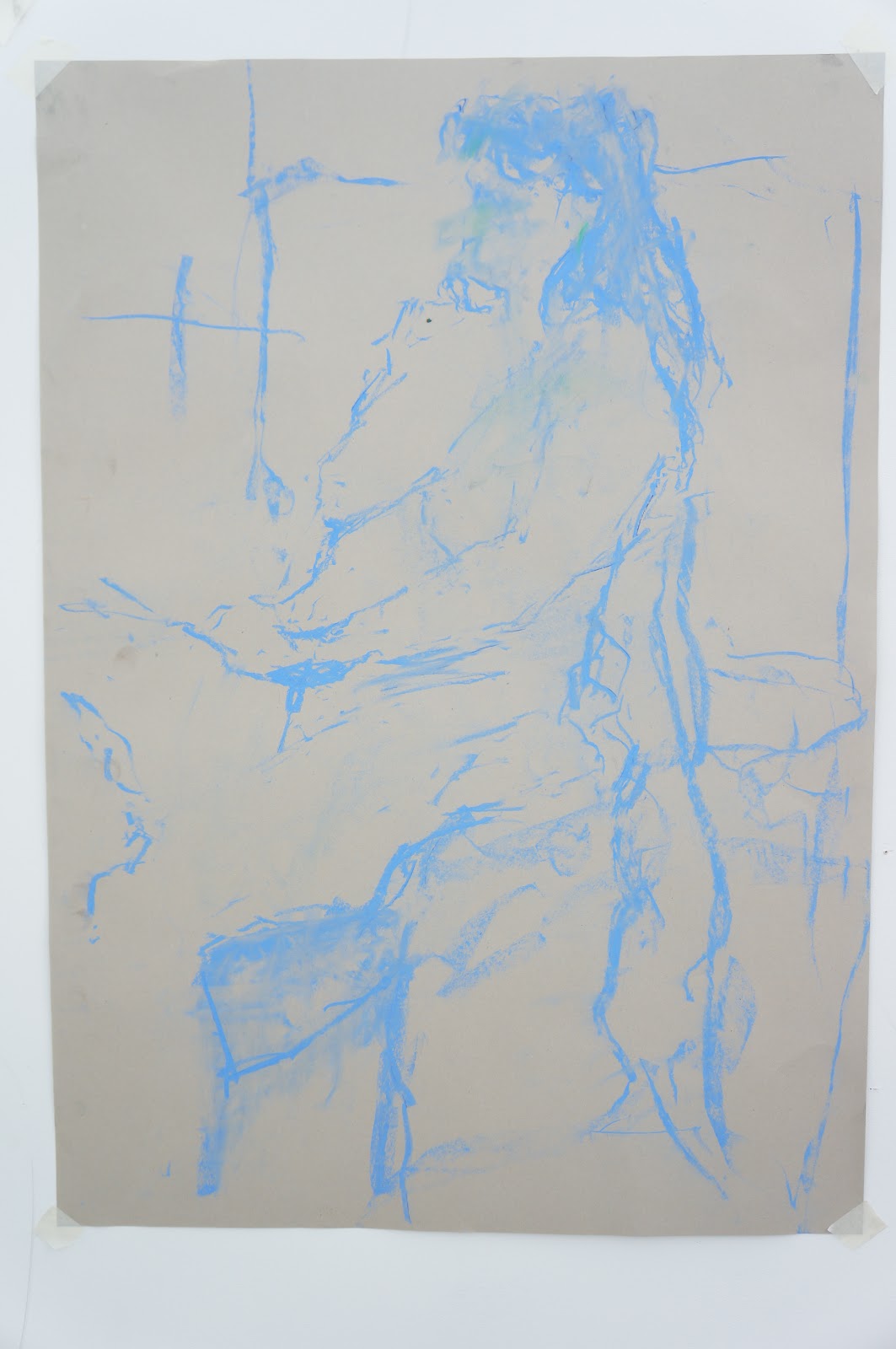
I feel my work is leading towards sculpture because I can transfer my drawing techniques into other forms. Experimental studies.
From observation in life drawing class


Another observation


Wire drawing of a drawing from life class.

''


Thursday, 18 April 2013

Marc Quinn

Book: The Portrait Now  - Nairne & Howgate


Marc Quinn
Lucas, 2001
Human placenta and umbilical cord, stainless steel, perspex, refrigeration equipment 2045 x 640 x 640mm


 A portrait of his son Lucas. I am interested in Mark Quinn's use of unconventional materials and the fragile qualities of this portrait. The sculpture won't survive without the freezer 'perhaps reflecting the fragility of life itself'. He has chosen to isolate the head of his son, who appears to be as young baby. I think this piece communicates vulnerability and dependence. I think it's a beautiful piece because he has literally captured a moment of his son's life.

This piece echoes an earlier sculpture 'Self' from 1991 which was made from nine pints of his own blood. however, he has extended a preoccupation with his own body and fragility to those around him.

Thursday, 11 April 2013

Jenny Saville


This work is about her experiences in motherhood taking inspiration from masterpieces such as Leonardo da Vinci’s 'The Virgin and Child with St. Anne and John the Baptist' sometimes called 'The Burlington House Cartoon'


Reproduction drawing I (after the Leonardo cartoon), 2009-2010
Pencil on paper
89 1/8 x 69 1/2 inches


Multiple impressions of each figure are drawn, erased and superimposed again. The relationship between them is expressed in a series of dynamic poses showing the struggling movements of her child and her trying to control them.


Leonardo da Vinci’s 'The Virgin and Child with St. Anne and John the Baptist'

Tuesday, 9 April 2013

Drawing Conference

Camera Lucida III: from drawing to drawing
Venue: Sainsbury Wing Theatre, The National Gallery, London
10am - 16:30pm

The conference explored how individuals, both in and outside art, use drawing. The discussion covered fine art and design, sound, architectural theory, medicine, mathematics and plant biology, creating a strong case for drawing as an essential component of complex, visual thinking.


The discussion made me appreciate and open up to others knowledge of drawing in a variety of situations. I found the discussion with Ali Mawle and Colin Wiggins to be inspirational. They talked about the work of Frank Auerbach, in particular, his drawings that are displayed in The National Galleries Cafe. They are drawings of artwork displayed around the National Gallery using materials such as oil pastel, felt pen, pens, pencils and coloured pencils, charcoal, ink. I felt I could relate to his drawings by his use of materials. I had already known about Frank Auerbach because I saw one of his self-portraits in the National Portrait Gallery earlier in the year which is what I think inspired me to do my self-portrait.


Drawing of 'Veronese's consecration of st. nicholas'


Drawing of 'Canaletto's stonemason's yard'


I had already known about Frank Auerbach because I saw one of his self-portraits in the National Portrait Gallery earlier in the year which is what I think inspired me to do my self-portrait.

I feel like my work started to progress further after my self-portrait and after my experience at the drawing conference because I think they both gave me more confidence in my passion for drawing.


Wednesday, 27 March 2013

After thoughts

After my pitch presentation, I had other ideas using the same themes. Combining photography, video stills and found materials to produce collages as a source to draw from and work with.


Starting Point:

Collect magazines, photographs (found materials). Continue making films and using photography to record thoughts.


Research artists who work with collage photographic media. I feel that working with a range of materials is important to me because I am constantly experimenting.


Anticipated outcomes:

Large-scale drawings/ paintings

Tuesday, 26 March 2013

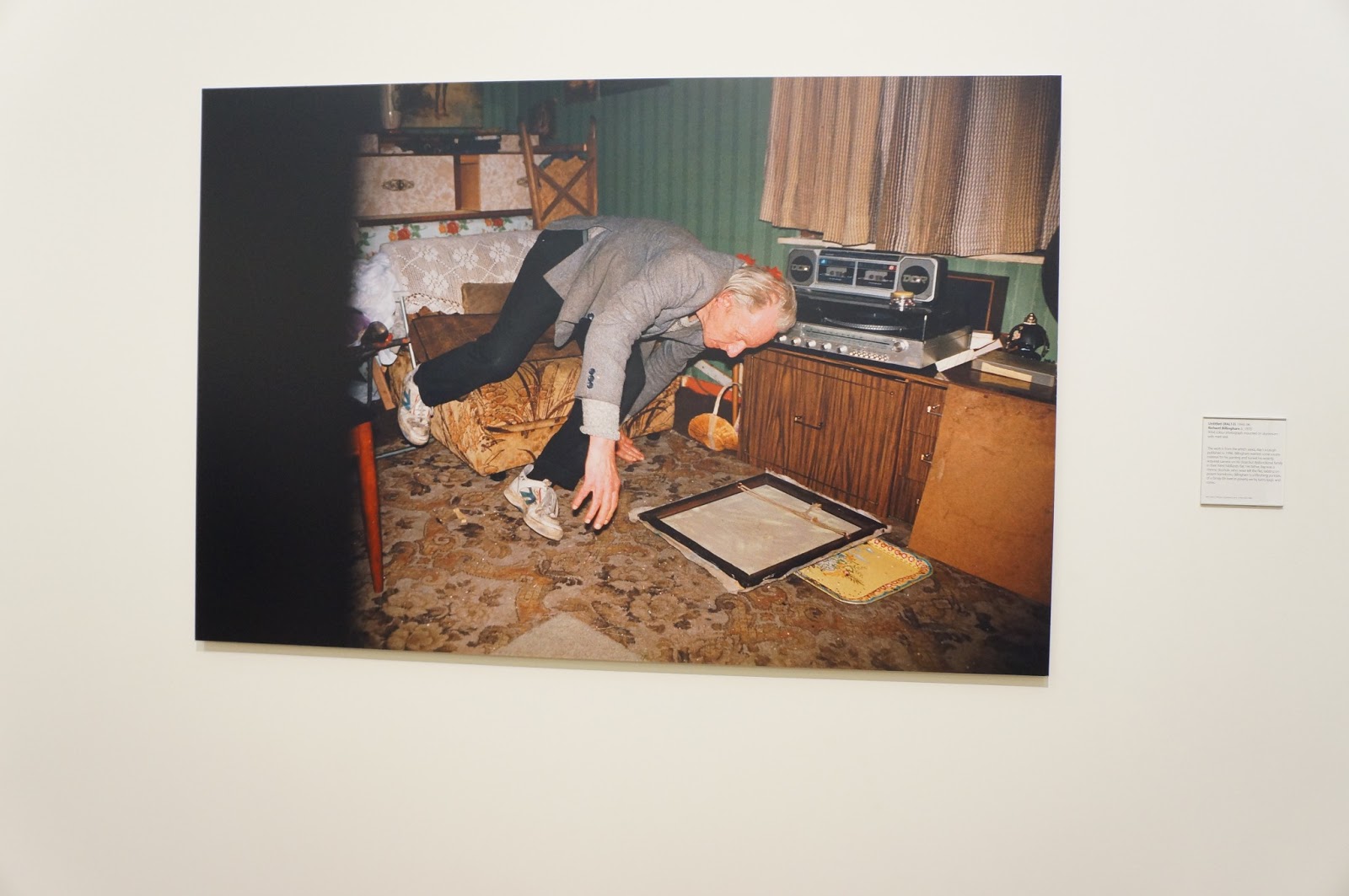
Manchester Art Gallery - Richard Billingham

(Untitled)  RAL 13 1994-96
Richard Billingham b. 1970
SFA4 colour photograph mounted on aluminium with matt seal

This work is from artist's series, Ray's a laugh published in 1996. Billingham wanted some source material for his painting and turned his recently acquired camera on his close but dysfunctional family in their west midlands flat.


I came across Richard Billingham in the focal points exhibition.


Billingham took a series of photographs of his family between 1990 and 1996 in a Stourbridge council flat in the British Midlands, originally intended as a source for paintings. The photographs were shot in a spontaneous style with a cheap instamatic camera on an out of date 35mm film. Antony Reynolds Gallery published many of the images in the book Ray's a Laugh in 1996 in which all the photographs in the series are untitled and many of them released in large scale prints like this one.

Tate -
'This book is about my close family. My father Raymond is a chronic alcoholic. He doesn’t like going outside and mostly drinks homebrew. My mother Elizabeth hardly drinks but she does smoke a lot. She likes pets and things that are decorative. They married in 1970 and I was born soon after. My younger brother Jason was taken into care when he was 11 but is now back with Ray and Liz again. Recently he became a father. Ray says Jason is unruly.
Jason says Ray’s a laugh but doesn’t want to be like him.
(Quoted in Ray’s a Laugh, back cover.)

Billingham’s project recalls the work of American photographer Nan Goldin (born 1953) whose gritty photographs of herself, her lovers and her friends, taken in the 1970s and 80s, inspired a generation of young journalistic and art photographers. Her Ballad of Sexual Dependency, published as a book in 1986, shows people under the influence of drugs and alcohol in intimate and sometimes painfully raw situations.

http://www.tate.org.uk/art/artworks/billingham-untitled-p11756/text-summary


Fish Tank
Parts of the filming make me feel uncomfortable such as when they are having an argument about money and who pays bills etc. In this documentary and series of photographs I feel Billingham exploits his family. We rarely see what happens in other people's home lives.  Your home is a place were you feel most comfortable, because no one is judging you. I feel uploading the film on the internet has made Billingham's family  vulnerable. For me, it would feel morally wrong. I would edit parts of the film leaving out parts that I feel would make my family vulnerable, leaving humorous and less explicit parts. However I respect his work because he has been brave but I don't particularly like it.